Ticket Booking PLatform
IRCTC - Ticket Booking Platform
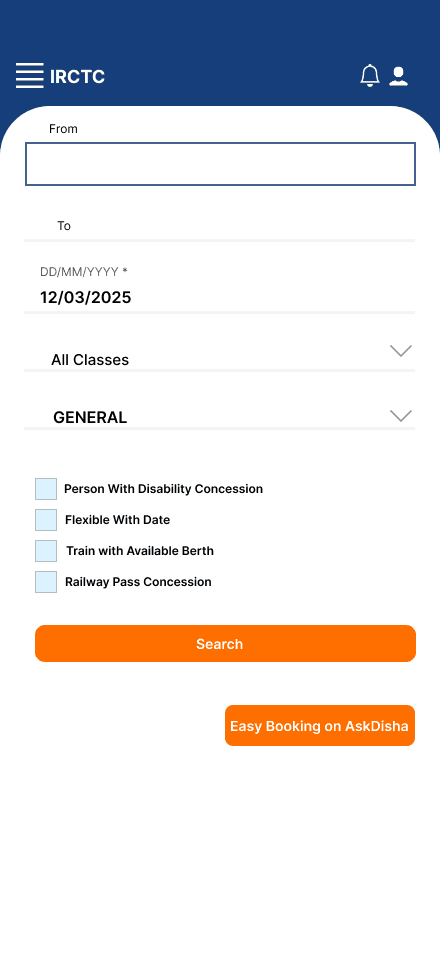

IRCTC is India’s primary government organization for train travel, handling millions of daily bookings for rail tickets, meals, and tourism. Despite its high traffic, the platform was "bombarded" with redundant CTAs and a cluttered navigatory structure that lacked clear hierarchy. I led the Information Architecture (IA) redesign to transform this complex, information-heavy site into a streamlined, user-centric travel hub.
Timeline
8 weeks, from research and evaluation to sitemap redesign and wireframing.
Responsibility
Interaction Designer & Product Designer. I owned the Content Inventory, Sitemap restructuring, and the creation of high-fidelity wireframes and user flows.
Goal
Improve navigation clarity and visibility by placing high-priority travel elements directly in the user’s line of sight.
The IRCTC homepage suffered from severe information overload, making it difficult for both new and returning users to locate essential services like Tatkal booking and train schedules.
Users Interviewed
We utilized 8 participants for Tree Testing and 5 participants for Open Card Sorting to evaluate the findability of existing and proposed navigation.
Observed Behaviors
New Users were overwhelmed by "hidden" data like fare prices and seat availability, which required multiple redundant clicks.
Power Users struggled with time-sensitive tasks like Tatkal reservations and rescheduling, leading to high stress.
Direct Quotes
"Important information like waiting possibilities and fare price is hidden behind a few clicks."
"I find it difficult to manage Tatkal reservations and frequently reschedule tickets."
We performed a Heuristic Analysis and Content Inventory to detect usability gaps.
Current State: The navigation lacked hierarchy, causing critical CTAs for quick booking to blend into the background due to poor color use and cluttered layout.


Our research focused on restructuring the content architecture to align with real-world travel scenarios rather than administrative categories.
Competitive Analysis Finding
While IRCTC provides diverse services (flights, hotels, buses), the lack of User-Defined Hierarchy meant users only saw it as a rail booking tool, ignoring high-value tourism offerings.
Key Synthesis Artifact
We conducted Open Card Sorting (40–42 cards) to let users define the logical labels and categories for travel services.
Key Insight
Users group services by "Travel Mode" (Train, Flight, Bus) and "Journey Support" (Meals, Support, Cancellation) rather than government-defined departments.
Design Direction:
This drove a strategy to streamline navigation into high-priority branches, reducing the cognitive load required to go through across different elements.

We used iterative testing to move from a "cluttered dashboard" to an "action-oriented portal."
Decision 1: Streamlining High-Priority Actions
The Failure
Tree testing revealed a 62.5% failure rate for users attempting to find "Group Ticket Booking".
The Pivot
We refined the sitemap to branch primary services into clear, logical subcategories that reduced redundant pathways.
The Result
Post-iteration, the navigation felt more streamlined, making high-priority actions like booking and support easier to access.
Decision 2: Promoting Ticket Cancellation Visibility
The Failure
62.5% of participants were unable to find the option to cancel a ticket within a reasonable timeframe (avg. 22.8 seconds).
The Pivot
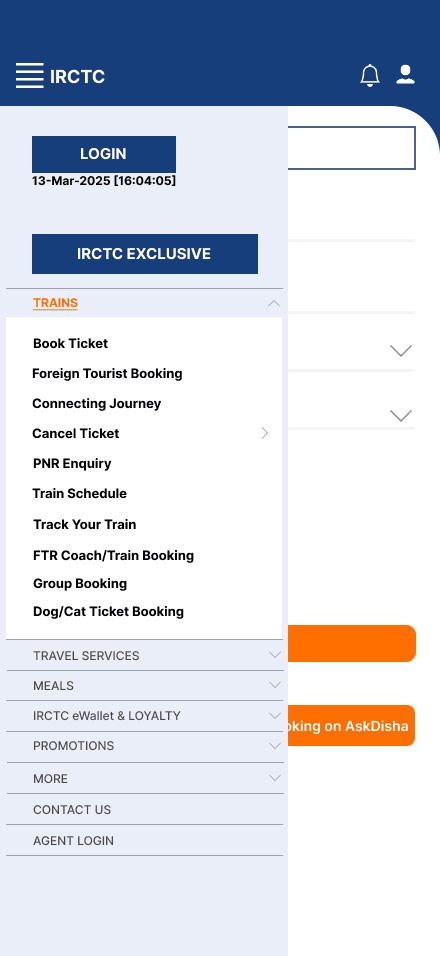
We moved "Cancel Ticket" to a prominent position in the expanded navigation menu with fewer required clicks.
The Result
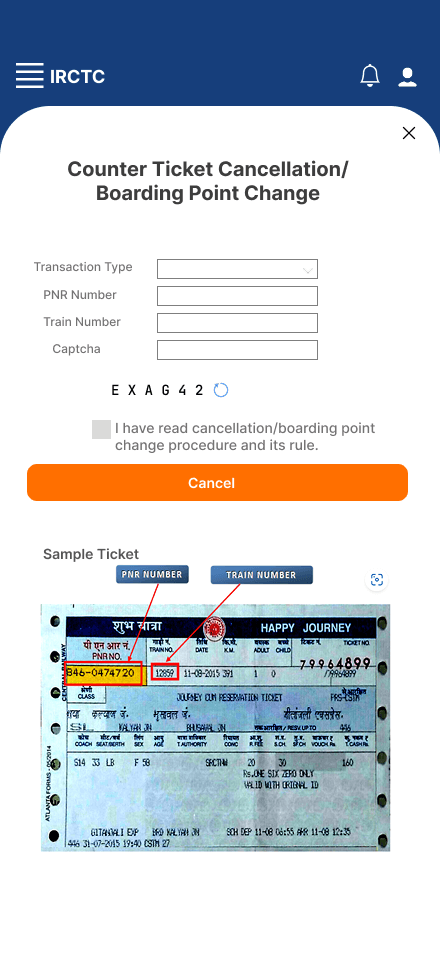
We designed wireframes where cancellation is immediate and accessible, guaranteeing clear error reduction through a structured format.
Decision 3: Prominent Customer Support Access
The Failure
Users reported "discomfort" and stress when trying to find customer care links during urgent booking failures.
The Pivot
Support options were made prominent with direct, expandable sections for FAQs, live chat, and helplines.
The Result
By bridging the gap between theoretical IA and real-world application, we reduced the dependency on external searches for help.
The final information architecture facilitates a smooth, fast process for both booking and rescheduling.
Interactive Sitemap
We designed a final sitemap that logicalizes services ranging from E-Wheelchairs to E-Catering, ensuring accessibility is baked into the hierarchy.
Content-Aware Prompting
We developed wireframes where "Support" and "Cancel Ticket" stand out through clear labels and prominent placement, reducing the need for lengthy searches.
Gamified Satisfaction
The redesigned flow allows users to find what they need without "unnecessary clicks," directly impacting user satisfaction and retention.
The redesign transformed a bureaucratic interface into a high-utility travel platform.
Intuitiveness Score
Usability testing confirmed that the new layout improved user efficiency and information findability.
Behavioral Shift
By restructuring the sitemap based on card sorting data, we reduced user discomfort and the feeling of being "bombarded" by info.
Metrics of Success
Accessibility: Integrated specialized sections for "E-Wheelchair" and "User Guides" to accommodate diverse traveler needs.
Speed: Successfully addressed the baseline 62.5% failure rate in critical tasks by reducing the total steps in the cancellation and booking flows.
Conclusion
This project proved that effective navigation is a cycle of learning and testing; by aligning the IA with user mental models, we turned a cluttered archive into a efficient travel tool.